Underfoot Histories: Recording St Nicholas Encaustic Tiles Before Another Winter
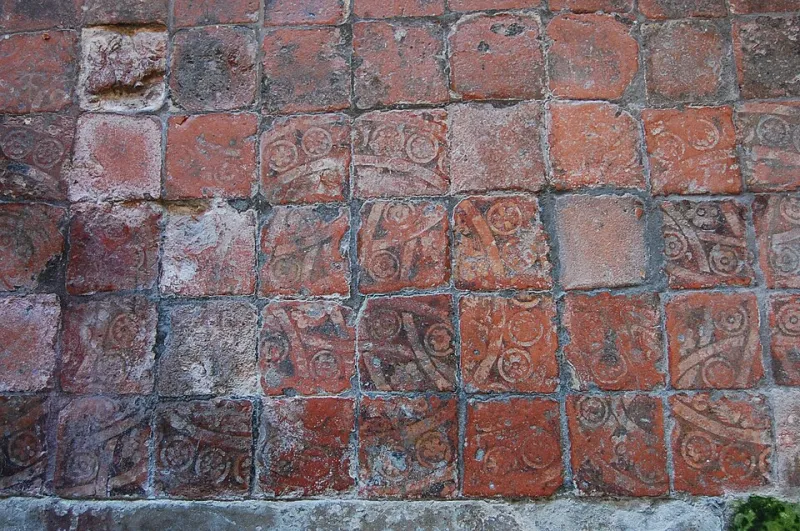
Photo: Julian P Guffogg , CC BY-SA 2.0, via Wikimedia Commons
Floor tiles are the part of a church that everyone walks over and almost no one records. In a church dedicated to St Nicholas, however, the encaustic pavement can carry the patron’s mitre, crozier, ship or paired purses, set into borders and roundels that date from the Victorian and Edwardian restorations. These are not merely decorative surfaces. They are datable, maker-marked and vulnerable elements of the church’s fabric, and they deserve a place in the local conservation survey before another winter of damp and footfall takes a further toll.
Why floors fall through the net
Fabric surveys tend to begin at the roof and work downwards. The floor is often treated as a level surface rather than an archaeological deposit. In practice, a tiled pavement records the taste of a particular restoration campaign, the resources of the parish at a given moment and the iconography that a congregation thought appropriate for its patron. A worn St Nicholas roundel at the head of an aisle may be the only surviving figurative element from a late nineteenth-century scheme. Once the pattern is worn through, the evidence is gone.
Reading the tile: pattern, maker and date
Encaustic tiles are inlaid, not painted. The pattern is formed by pressing coloured clay into a recess in the body, so the design sits flush with the surface and survives, in outline, long after the glaze has gone. Victorian and Edwardian examples in St Nicholas churches commonly come from Minton Hollins and Maw and Company, though local merchants and smaller works supplied simpler fields and borders. Turn over a loose tile, if it can be done safely, and look for a maker’s name, patent mark or impressed number on the reverse. The underside, bedding mortar and thickness are often more informative than the face.
St Nicholas imagery is usually part of a scheme rather than a single portrait. Look for a mitre in a border roundel, a crozier in a corner spandrel, three purses or three golden balls in a repeating motif, or a ship in a nave panel. Inscriptions may run along the border: a dedication, a date, a donor’s name or a verse. Record the whole scheme before isolating a single tile.
A simple recording method
- Draw the floor plan at a workable scale, using graph paper or a simple CAD sketch. Mark pew platforms, radiators and door swings, because these explain wear patterns.
- Number each significant tile or group. Use a prefix for the bay or aisle, so that the numbering survives later reordering.
- Photograph perpendicular to the floor with a scale and a north arrow. Take a second image with raking light to show cracks, hollows and losses.
- Note condition in plain words: worn, cracked, loose, hollow-sounding, stained, efflorescent, previously replaced. A gentle tap with a wooden stick will reveal hollow bedding without causing damage.
- Record the immediate environment: leaks above, door mats, heating outlets, flower stands and the route of processions. Footfall is not random.
Cleaning, damp and footfall
Most damage to encaustic floors is cumulative rather than dramatic. Wet mopping drives water into open joints; acidic cleaners attack the glaze and lime-rich bedding; sealers trap moisture and can lift fragile surfaces. Use a neutral pH cleaner, minimal water and a dry finish. Barrier matting at doors removes grit that acts as an abrasive underfoot. Do not move heavy furniture across the tiles without a proper lifting plan.
Damp is the greater threat. Efflorescence, dark patches and loose tiles often point to a rainwater goods failure, high ground level or a blocked drainage channel rather than to the floor itself. Address the source before considering any intervention. A conservator should be consulted before lifting, re-bedding or consolidating tiles, and any work in a faculty church should go through the proper diocesan advisory route.
Making the case to the fabric committee
The quinquennial inspection is the natural home for a floor appendix. Ask the inspecting architect whether floor finishes were assessed, and offer the local society’s record as a supplement. A short report with a plan, photographs and a condition schedule is far more useful than a folder of unlabelled images. It gives the parish a baseline, helps contractors avoid damage and makes the case for small, practical interventions such as a porch mat, a gutter repair or a temporary walkway during building work.
The mitre beneath your feet is not a minor decoration. It is a dated, signed and often fragile part of the patron’s presence in the building. Record it in 2026, while the pattern can still be read.