Anchored Above the Aisle: Conserving Votive Ship Models in St Nicholas Churches
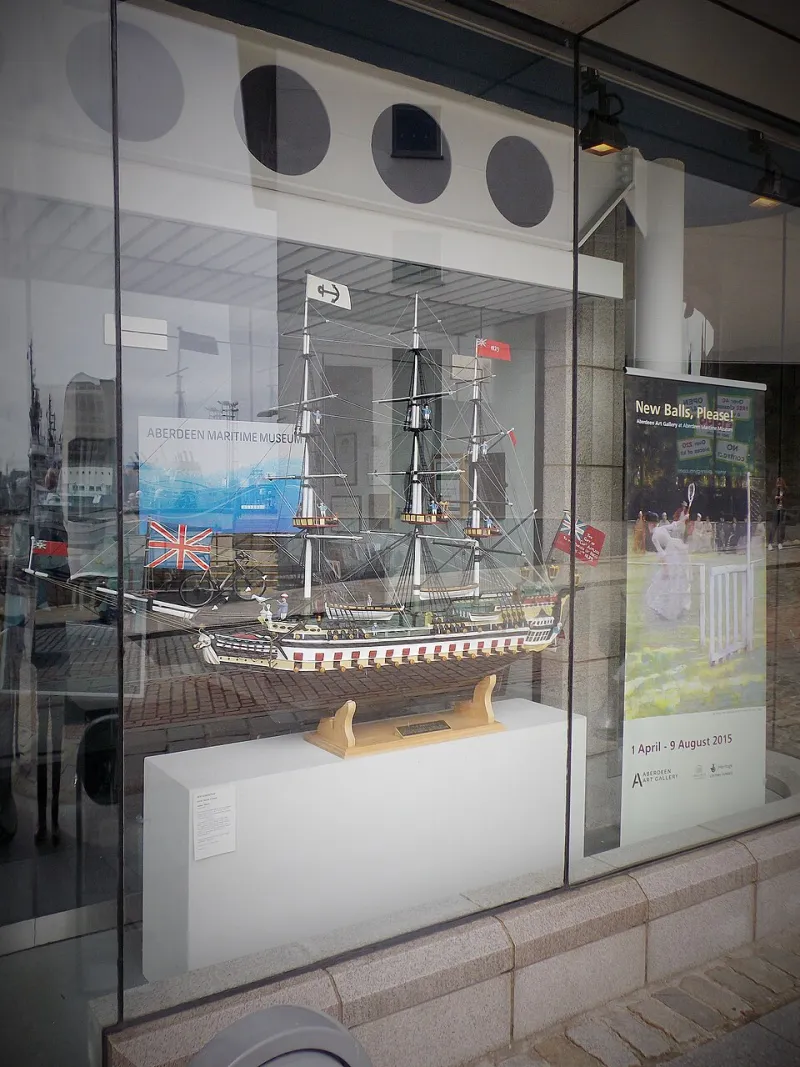
Photo: Stanley Howe , CC BY-SA 2.0, via Wikimedia Commons
Walk into a number of British churches dedicated to St Nicholas and, sooner or later, the eye is caught by a vessel overhead: a fishing smack, a collier, a naval cutter or a full-rigged ship, suspended above a aisle or transept. These models are often treated as quaint ornaments, especially in towns with a maritime past, but they deserve a more careful reading. They are objects of local memory, sometimes ex-voto offerings, sometimes memorials, sometimes the work of a skilled parishioner, and occasionally all three at once. Their conservation raises questions that are practical, ethical and interpretive, and they are particularly pressing in 2026 as parishes review collections, insurance and display policies.
A Maritime Offering with a Local Accent
St Nicholas is, of course, the patron of sailors, and it is no accident that ship models cluster in churches associated with fishing communities, dockyard towns and ports. The connection is not uniform. In some parishes the model is a thanksgiving for a safe return; in others it commemorates a wreck, a vessel lost with all hands, or a long association with a local fleet. In naval towns the model may reflect a dockyard apprenticeship or a memorial to a particular ship. In fishing villages it may be humbler in execution but no less charged with meaning. The first conservation lesson is therefore interpretive: do not assume that every model is ancient, and do not assume that every model is merely decorative. Provenance matters, and it is often held in parish magazines, vestry minutes, donor boards or the memories of local families rather than in any formal catalogue.
What the Models Are, and What They Are Not
Many surviving models in British churches date from the nineteenth or twentieth centuries, though earlier examples exist. Some are accurate builders' models; others are vernacular works made from memory or from whatever materials were to hand. A few may have been votive offerings in the strict sense, given in fulfilment of a vow or in thanksgiving for deliverance. Others are memorial gifts, Sunday school projects or the residue of a parish exhibition. This matters for care. A model with strong local provenance should be treated as a document as well as an object. A later decorative model may still be significant, but its conservation should not be allowed to obscure the distinction. Parishes should record what is known, what is conjectural and what is unknown, and make that record available to researchers.
A Practical Conservation Checklist for Parishes
1. Survey before you touch
Begin with a condition survey, preferably with advice from a conservator or a regional museum service. Photograph the model from several angles, including the hull, deck, rigging, mounts and ceiling fixings. Note losses, loose fittings, corrosion, insect damage and previous repairs. Record its position, height and method of suspension. If the model is to be moved, establish whether faculty permission or other denominational approval is required, and whether the insurer needs notification.
2. Dust with restraint
Dust is the enemy of rigging and delicate fittings. Use a soft conservation brush and a museum vacuum with low suction and a gauze-covered nozzle, working downwards and supporting the model where possible. Do not use household dusters, feather brushes or polishing cloths, which can snag rigging and drive grit into surfaces. Avoid liquid cleaners unless a conservator has approved them for the specific material. In many churches the safest routine is a light annual clean by trained volunteers, with deeper cleaning left to specialists.
3. Respect the rigging
Rigging is usually the most fragile element and the most tempting to handle. Never lift or steady a model by its rigging, masts or yards. Check that the suspension system is sound and that the hull is supported by a bespoke cradle or mount rather than by lines under tension. Loose lines should be secured or recorded, not tightened indiscriminately. If the model is suspended above a public area, ensure that fixings are inspected regularly and that the model cannot swing or rotate into contact with columns, lights or other fittings.
4. Control light and environment
Light exposure fades paint, bleaches wood and degrades textiles and cordage. Where possible, position models away from direct sunlight and fit UV-filtering glazing or blinds to nearby windows. Stable relative humidity is generally more important than a single ideal figure, and churches should avoid placing models near heating outlets, radiators or damp walls. Fluctuations cause movement in wood and can loosen joints. If a model is displayed in a case, ensure adequate ventilation and avoid sealed microclimates that trap moisture.
5. Watch for pests and security risks
Wood, cordage and old adhesives can attract furniture beetles and other pests. Look for fresh frass, flight holes and loose dust beneath the model. Report any activity promptly. Security is equally important: models are attractive to thieves and can be damaged by unauthorised handling. Where a model is particularly significant, consider a discreet alarm, a locked case or improved locking to the church building.
6. Review insurance and valuation
Many parish insurance policies cover contents, but votive ship models are often undervalued because they have never been formally assessed. A professional valuation should take account of provenance, condition, rarity and local significance, not merely size or age. Update the inventory description and photographs, and confirm whether the policy requires the model to be professionally conserved after damage. If the model is loaned for exhibition, ensure that the loan agreement sets out handling, environmental and insurance responsibilities.
7. Interpret with honesty
Good interpretation does not turn the model into a mascot. A concise panel or guide should state what is known about the maker, date, donor and occasion, and should distinguish fact from local tradition. It should explain why the model is in the church and how it relates to St Nicholas, the maritime community and the building. Avoid dressing the model with seasonal decorations, tinsel or lights, which can obscure detail and cause damage. The patron saint is not a decorative prop, and the model is not a seasonal ornament.
Displaying with Restraint
The most responsible display is often the least intrusive. Keep the model in its historic position where this is safe, but do not sacrifice stability for picturesque effect. If it must be moved, choose a location with controlled light, low public traffic and a secure fixing. Provide a clear sightline and a safe viewing distance. Where a model is too fragile for open display, consider a high-quality facsimile or a digital interpretation station, with the original conserved and stored appropriately. This is not a retreat from public access; it is a way of ensuring that the object survives for the next generation of parishioners and visitors.
A Local Society's Role
Local societies can help by recording oral history, photographing models, tracing donors and preparing condition notes for the parish. They can also encourage a calm, evidence-led approach to display. The St Nicholas Society's interest in patronal festivals and conservation is well served by such work: a ship model above the aisle is a reminder that devotion, trade, memory and craft are often entangled. Care for it with the same seriousness that its makers and donors brought to it, and it will continue to speak of the communities that hung it there.