Ledger and Lantern: Tracing Britain's Forgotten St Nicholas Charities
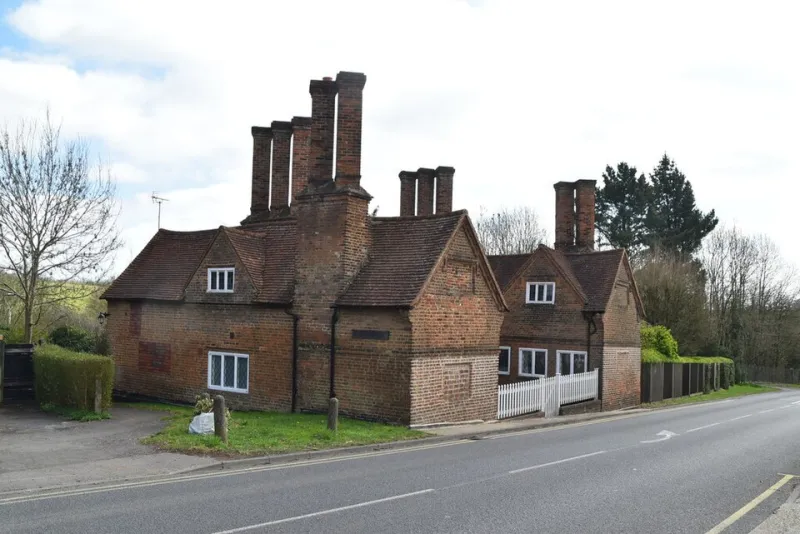
Photo: N Chadwick , CC BY-SA 2.0, via Wikimedia Commons
In a county record office somewhere in England, a trust deed is being unfolded for the first time in years. The parchment is creased, the seal is broken and the handwriting has the dense particularity of the seventeenth century. Among the names of feoffees and the schedule of lands, the purpose of the charity is set out in plain terms: a yearly sum for the poor, a house for aged persons, or instruction for children. The dedication may be to St Nicholas, patron of merchants, sailors and children, and the charity may still exist today under a name that few residents connect with the parish church.
The Three Golden Balls and the Merchant Connection
The three golden balls traditionally associated with St Nicholas are familiar from pawnbrokers' signs, but their deeper history belongs to the saint's reputation for secret generosity. In British towns, that reputation attached itself to practical forms of giving: bread charities, penny doles, apprentice fees, clothing grants and almshouse accommodation. Merchant guilds and wealthy traders often founded or endowed such charities, invoking St Nicholas as a fitting patron for ventures that combined commercial wealth with Christian obligation. The result is a scattered inheritance of small trusts, some still active, some amalgamated, and some known only through a line in a parish history.
These charities are easily overlooked because they do not always announce themselves. A row of almshouses may be admired as picturesque cottages without any public notice of its charitable origin. A school foundation may survive only in the name of an academy or in a small exhibition in a corridor. A dole may be distributed quietly each December, recorded in a ledger rather than a press release. Yet each represents a legal and social document as much as a building or a payment.
Reading the Paper Trail
For local historians, the starting point is usually the Charity Commission's register of charities, which records trustees, objects and accounts for registered bodies. Not every historic charity is registered in the same way, and some small trusts have been merged or wound up. The next layer is archival: diocesan records, county record offices, borough archives, parish meeting minutes, wills, deeds, enclosure awards and local newspapers. A trust deed may name property that has since been sold, or a rentcharge that has been redeemed. A scheme approved by the commissioners may explain how an older endowment was modernised.
The trail often requires patience rather than expertise. A volunteer with an interest in palaeography can transcribe a deed; a retired treasurer can interpret an old account book; a local studies librarian can identify a street that has changed its name. The St Nicholas connection may appear only in a dedication clause or a seal, so it is worth searching under variants: St Nicholas, Nicholas, Nichol, and the Latin forms. The same applies to buildings: an almshouse chapel, a schoolroom or a gatehouse may carry the saint's emblem in stone, glass or ironwork long after the foundation's original purpose has altered.
Buildings, Doles and School Foundations
The physical legacy is varied. Almshouses are perhaps the most visible, often arranged around a courtyard or ranged along a street, with a chapel or communal room at their heart. Their conservation raises familiar questions: roof coverings, rainwater goods, damp, heating, accessibility and the balance between historic fabric and modern comfort. Trustees of small charities may find themselves responsible for listed buildings with modest reserves and no professional staff. Support from local building conservation officers, historic churches trusts and specialist surveyors can be essential, but it is not always obvious where to begin.
School foundations present a different challenge. Many were refounded in the nineteenth century and later absorbed into state education. Their original endowments may now support bursaries, prizes or educational projects. The records can be fragmentary, but they often illuminate the social history of a town: which children were helped, what clothing was provided, how apprentices were chosen. Doles, meanwhile, survive as small grants or distributions, sometimes administered by a united charity. They are a reminder that charitable giving has long been local, face-to-face and deliberately modest.
Conservation by Trustees and Volunteers
Caring for these legacies is not only a matter of repairing stone. It is also a matter of good governance. Trustees must understand the charity's objects, invest endowments prudently and account for their decisions. Where the original purpose has become impractical, the Charity Commission can approve a scheme to apply the funds more usefully, a process known as cy-près. Such changes are not betrayals of the founders; they are part of a long tradition of adapting old gifts to new circumstances.
Volunteers play a crucial role in documenting and interpreting these charities. A local history society may compile a list of St Nicholas foundations across a district, photograph their buildings and transcribe their inscriptions. A church may mount an exhibition drawing on almshouse records. A school may invite pupils to study a trust deed as part of a local history project. These are modest activities, but they build a public record that would otherwise remain scattered in strongrooms and filing cabinets.
Why Small Endowments Matter in 2026
In 2026, the heritage sector is rightly concerned with large conservation projects, visitor infrastructure and the future of historic places of worship. The small St Nicholas charities offer a different lesson. They show how heritage survives through institutions as well as monuments: through a trustee meeting, a rentcharge, a repaired roof, a dole paid in December. They connect the saint's feast to the ordinary fabric of a town, long after the medieval guild that founded them has gone.
For the St Nicholas Society, these charities are a reminder that patronage is not only liturgical. It is also practical, legal and local. The three golden balls may hang above a pawnbroker's shop, but the same symbol points to a longer history of lending, giving and stewardship. Tracing that history requires no special privilege, only curiosity and a willingness to follow the paper trail from parish chest to county record office. The reward is a fuller picture of how British communities have cared for their own, and how they might continue to do so.