Signs of Grace: St Nicholas on Britain’s Pub Boards and Shopfronts
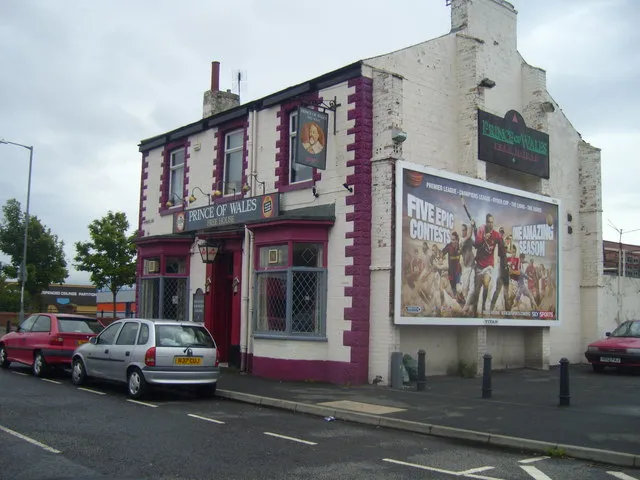
Photo: Ian Barton, CC BY-SA 2.0, via Wikimedia Commons
St Nicholas has a habit of appearing where people are on the move. He is found in the dedications of coastal churches, in the names of lanes leading down to old quays, and on the hanging signs of inns that once served carriers, drovers and seafarers. The signboard is a modest archive. It is also a vulnerable one. Paint fades, breweries rebrand, shopfronts are replaced, and a name that has stood for generations can disappear in a single season of refurbishment.
For the St Nicholas Society, the pub sign and the old shop fascia are not mere commercial decoration. They are small public monuments to parish trade, travel and memory. A trail through Britain’s high streets and country lanes in 2026 is therefore both a pleasure and a piece of quiet conservation work.
A Patron for the Road, the River and the Sea
The reasons for St Nicholas’s presence in commercial names lie in his broad patronage. He is traditionally associated with sailors, merchants, travellers and children, and with the safe conduct of those who set out from home. In port towns, that association was practical as well as devotional. A vessel might be named for him; a chapel might stand at the harbour mouth; an inn near the quay might carry his image for the benefit of those waiting for tide or passage.
Inland, the same logic travelled along the roads. Market towns and staging points had inns that served people arriving from elsewhere. A sign bearing St Nicholas offered a familiar emblem of protection and hospitality. It also signalled a house that understood the rhythms of arrival and departure. For merchants, the connection was equally natural: St Nicholas was a patron of trade, and his feast on 6 December often coincided with winter markets and fairs.
Reading the Signboard
A signboard repays close looking. The name itself may be the simplest form: an inn called the St Nicholas, or the Nicholas, or a shop trading under his name. But the visual vocabulary matters too. A bishop’s mitre, a crozier, three golden balls, a ship, or a group of children can all point to the saint, even where the lettering has been altered. Some signs are Victorian or inter-war replacements of older boards; others are modern exercises in heritage style. The historian’s task is not to assume antiquity, but to ask what each board is trying to remember.
Shopfronts are less frequently studied than pub signs, yet they form part of the same street-level record. A long-established pharmacy, a bakery or a small store may carry the name because of a local dedication, a family tradition or a former parish guild. Sometimes the connection is slender, and sometimes it is documentary. Either way, the name is evidence of how a community has chosen to place the saint in ordinary life.
Trade, Parish and Patronage
The distribution of these names often follows older patterns of trade. Coastal settlements, river crossings, market squares and coaching routes are fertile ground. So are streets close to medieval churches dedicated to St Nicholas, where the parish name has seeped into neighbouring businesses over centuries. In some towns, the feast day itself was once marked with fairs or guild activity, and the commercial name may preserve a fragment of that calendar.
This is why a pub sign should not be read in isolation. It belongs with the church dedication, the street name, the market charter, the harbour wall and the local newspaper archive. Taken together, these fragments can reveal a parish economy shaped by water, roads and seasonal trade. The sign is the visible tip of a much longer story.
Why Signboards Vanish
The threats are familiar. Brewery consolidation has swept away many independent house names or reduced them to small secondary boards. High-street redevelopment has removed old fascias. Online retail has changed the economics of small shops. Even where a name survives, the sign may be replaced with a generic design that loses the saint’s emblem altogether. Unlike a listed building, a signboard can be removed without much formal ceremony.
That is why recording matters. A photograph taken in 2026 may be the only detailed record of a board that is repainted or removed in 2027. Conservation is not only about stone and glass; it is also about the evidence of ordinary commercial life.
Recording a Vanishing Corpus in 2026
Members can undertake a modest survey without specialist equipment. Begin with a clear record sheet: location, date of visit, name as displayed, business type, materials, condition, lettering style, symbols, and any visible date or maker’s mark. Photograph the whole frontage, the sign in context, and a close detail of the lettering or emblem. Note whether the name appears on other street furniture, such as a boundary marker or an old lamp plate.
Where possible, add a short note from local knowledge. Does the publican or shopkeeper know of an earlier name? Is there a photograph in the local studies library? Does the county archive hold a brewery inventory? Deposit the resulting record with the appropriate local record office or civic society, and consider sharing it with a heritage open day or parish history group.
A Modest Trail for Members
A useful trail need not be long. Choose one high street, one harbour quarter or one market place. Walk it slowly and look above the modern shopfronts. Record what remains, and note what has gone. The St Nicholas Society’s interest is not in nostalgia for its own sake, but in the careful documentation of a patronal presence that has shaped British streets for centuries.
The saint on the signboard is a small thing, easily overlooked. Yet these boards are part of the public face of local history. In 2026, the most useful act may be simply to look up, write it down, and make sure the record survives.