Stone, Salt and Sail: A Field Guide to Reading St Nicholas Churches
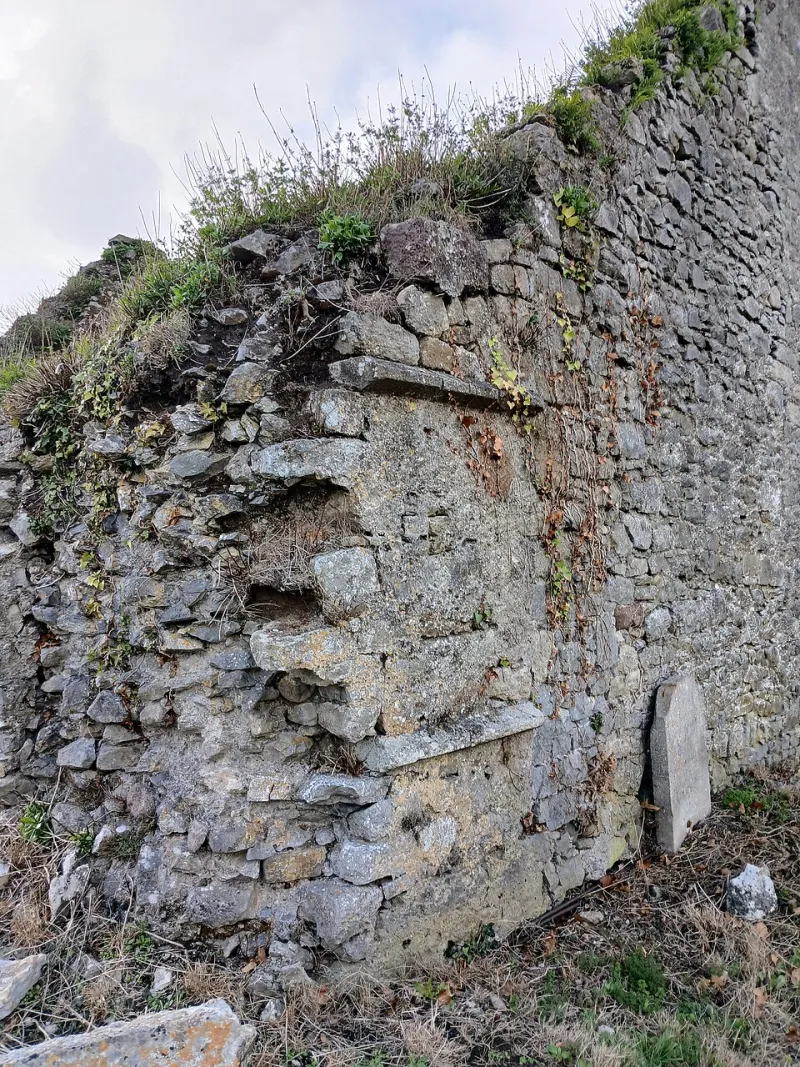
Photo: A.-K. D., CC BY-SA 4.0, via Wikimedia Commons
Walk into almost any old coastal town in England and you will eventually meet St Nicholas. The patron of sailors, fishermen, merchants and travellers accumulated dedications wherever boats were built or cargoes landed, which is why the density of St Nicholas churches maps so closely onto the coastline and the navigable rivers. Well over three hundred English churches carry the dedication, and for the heritage detective they offer an unusually legible record of how a parish made its living.
Why There Are So Many
The medieval proliferation of the dedication followed trade. Where a harbour existed, a chapel to St Nicholas tended to follow, sometimes as a dependent chapelry of a inland mother church and sometimes as a substantial cruciform building funded by merchants' guilds. Norfolk and Suffolk alone account for a striking proportion; Kent, Essex, Devon, Cornwall and the Yorkshire coast add more. Inland, the dedication often marks a river crossing, a market town or a guild of wool merchants who looked to Nicholas as their patron.
The iconography is a useful starting point for identification, because it repeats. Three golden balls or three purses recall the saint's generosity to a impoverished father and his daughters. A ship, an anchor or a set of oars marks his protection of those at sea. Three children in a tub recall the legend of the murdered scholars restored to life. A bishop with a book and a small ship at his feet is almost certainly Nicholas.
Clues in the Fabric
Begin low. Norman fonts are the most reliable early marker: square bowls, heavy billet or chevron moulding, and occasionally carving that hints at a maritime or devotional programme. Fonts survive when walls are rebuilt, and a Norman bowl in a fourteenth-century church tells you the nave has been through at least one major campaign.
Then look at the walls. Ship graffiti — scratched, informal outlines cut into aisle walls and porch jambs by people with time on their hands — survives in a surprising number of coastal churches and has become a subject of serious recording in its own right. Votive ship models, suspended from nave ceilings, are a later and more formal version of the same instinct. Anchors appear on weathervanes, on bench ends and, in some places, carved into the stonework of the tower.
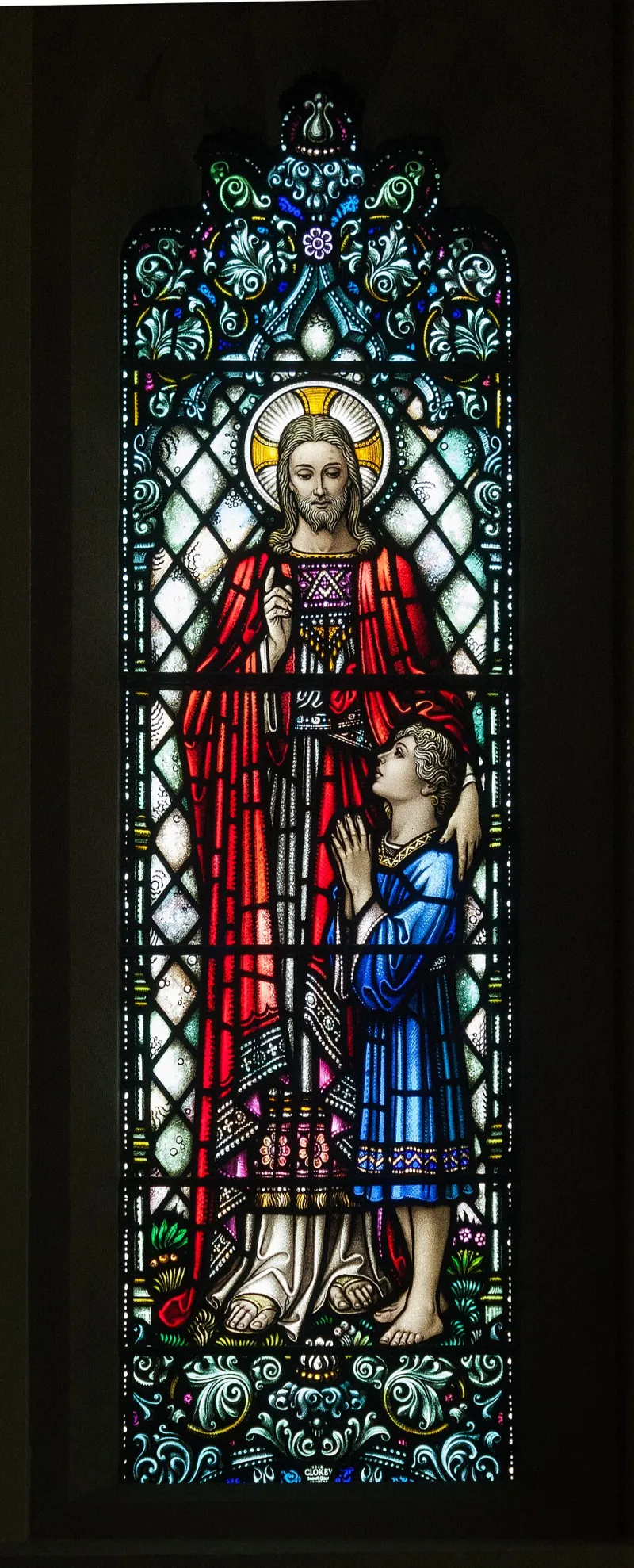
Rood screens and glass carry the devotional programme. Where a screen survives with its panels intact, look for the three purses; where Victorian restorers had a free hand, expect a full set-piece figure of the saint in stained glass, often by a named firm whose signature can be found in the corner of the light. That Victorian work is itself evidence of patronage — of a local landowner, a shipowner or a subscription committee — and deserves to be read as carefully as the medieval layers beneath it.
Three Churches to Visit
St Nicholas, Blakeney, Norfolk. A large, airy coastal church with a celebrated north porch and a scale that speaks of a wealthy medieval port now silted into a small village. It is the best place to see the contrast between mercantile ambition and present-day exposure to weather. Check opening arrangements before travelling, as coastal parishes often rely on volunteer keyholders out of season.
St Nicholas Cathedral, Newcastle upon Tyne. An urban counterpart. The lantern tower once served as a navigation mark for ships on the Tyne, a reminder that a St Nicholas dedication could be a piece of practical infrastructure as much as a devotional statement. The building has been heavily restored and reordered over the centuries, which makes it a good case study in how Victorian and twentieth-century work sits alongside medieval fabric.
St Nicholas, Deptford, London. A dockyard church with a tower attributed to Grinling Gibbons, serving a parish whose fortunes were tied to the Royal Dockyard and the river trades. Its history of damage, rebuilding and reinstatement illustrates how much of the maritime inheritance is a record of repair rather than of untouched survival.
Salt, Stone and the Conservation Question
Coastal churches face a specific set of pressures. Salt carried on wind-driven rain crystallises within the pore structure of stone and renders, and the resulting flaking can strip carved detail within a generation. Cement pointing, often applied in the twentieth century as a cheap fix, traps moisture and accelerates the decay it was meant to prevent; the remedy is usually lime mortar, softer than the stone and able to breathe.
Water management matters more than any single intervention. Blocked gutters, failed downpipes and raised ground levels around the walls do more cumulative damage than any storm. Where a faculty permits change, drainage and rainwater goods are usually the first call on any grant.
Funding remains the perennial constraint. The National Lottery Heritage Fund, the National Churches Trust and the Listed Places of Worship Grant Scheme are the standard routes, and each rewards a clear statement of public benefit — which is where visitor information, school visits and volunteer programmes earn their keep. Recording is a parallel form of conservation: the Church Heritage Record, diocesan Taking Stock reviews and local archaeological and graffiti survey groups all depend on volunteers who can photograph, measure and describe methodically. A good photographic record taken before scaffolding goes up is often the only detailed evidence of a detail that will not survive the next repair.
Reading a Church in an Afternoon
Work in a fixed order. Start outside with the tower, the porches and the roofline. Move to the font. Then the walls at waist height and below, where graffiti and tooling survive. Finish with the glass, the screen and the monuments, and note the name of the architect or restorer if the guidebook gives one, because the Victorian campaign is part of the story, not an interruption to it.
Take photographs, but check signage about flash and tripods, and send anything interesting to the local records office or the church's own fabric officer. The detective work is only half the job; the other half is making sure the next person can find what you found.