The Sixth of December Deserves Better Than Tinsel: A Case for the Patron’s Own Window

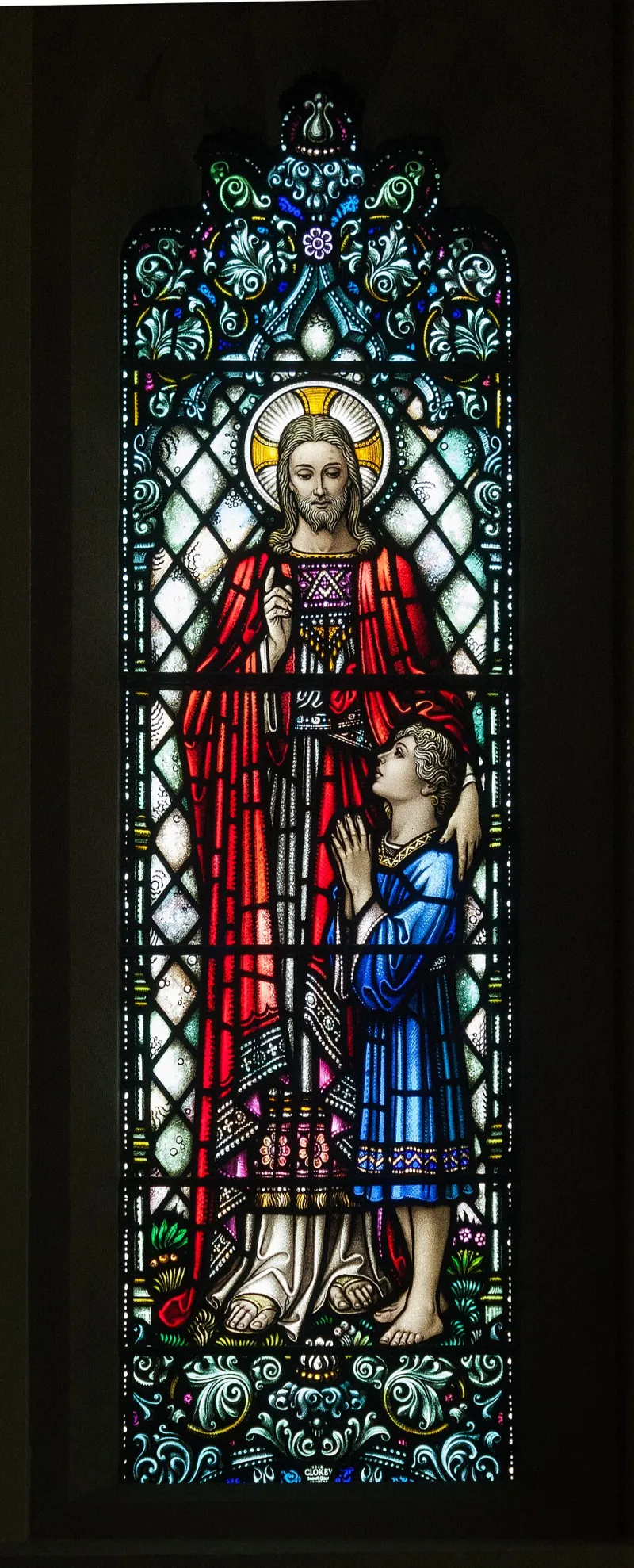
Photo: Florstein (Telegram:WikiPhoto.Space), CC BY-SA 4.0, via Wikimedia Commons
A Feast Hidden in Plain Sight
Walk through almost any British high street in early December and you will find the same visual grammar: fir garlands, reindeer silhouettes, and a red-suited figure who belongs to a different calendar altogether. St Nicholas, the patron whose feast falls on 6 December, is seldom absent — but he is rarely given room to be himself. His image appears on biscuit tins, in department-store grottos and on the occasional pub sign, folded into the great commercial wash of Christmas. The result is a curious amnesia. A saint whose cult shaped parish churches, charity halls and coastal chapels across the United Kingdom is remembered chiefly as a seasonal mascot.
That is not a reason for lamentation, but for a modest correction. In 2026, heritage venues, museums and independent shops could give St Nicholas a window of his own: a distinct but restrained display, held on or around 6 December, that explains the patronal feast rather than merely borrowing its colours. The proposal is deliberately small. Three gold balls, a shoe, and a locally made gift. No tinsel required.
Why the Generic Christmas Window Fails the Patron
The problem is not that Christmas retail mentions St Nicholas. It is that the mention is almost always decorative rather than explanatory. A shopfront that places a bishop’s mitre beside a snowman, or a museum case that labels a fourth-century Anatolian bishop as “Father Christmas”, tells the visitor very little. It flattens a complex figure — seafarer’s patron, protector of children, model of quiet almsgiving — into a single seasonal brand.
For heritage organisations, this is a conservation issue as much as an interpretive one. When a feast loses its distinct grammar, the objects associated with it become harder to read. The gold balls of the dowry legend, the shoe left by the hearth, the small tokens given to children: these are not generic Christmas props. They are visual clues to a specific devotional and charitable tradition. Without a setting that names them, they drift into the decorative background and eventually out of understanding.
Three Balls, One Shoe: A Modest Grammar of Display
A St Nicholas window does not need to be elaborate. Its power lies in restraint. The three gold balls — whether represented as gilded apples, wooden spheres or simple paper baubles — recall the legend of the bishop who provided dowries for three impoverished sisters, throwing the gold through a window or down a chimney according to regional tellings. The shoe recalls the custom, still remembered in parts of northern Europe and in British parish halls, of leaving footwear out on the eve of the feast. The local gift, modest and preferably made within a few miles of the window, connects the patron’s charity to present-day craft and community.
This trio works because each element can be explained in a sentence. A small card, handwritten or printed by a local press, is enough. The display should not attempt to recreate a medieval mystery play or a Victorian Christmas card. Its purpose is catechesis, not spectacle: to tell the visitor why 6 December matters in the life of a parish, a port or a market town.
The Independent Shop and the Local Gift
Independent retailers are well placed to host such a window because they already understand the value of a local story. A bookseller might pair the three balls with a locally printed chapbook on St Nicholas legends. A jeweller could display a single gilded sphere beside a note on the dowry tradition. A bakery might offer a small St Nicholas bun, wrapped plainly, with a card explaining the feast. The essential discipline is that the gift remains secondary to the explanation. The window is not a promotion with a saint attached; it is a patronal observance that happens to sit in a shop.
This distinction matters in a high street economy where seasonal goodwill is easily converted into sales pressure. A St Nicholas display should resist the urge to upsell. Its commercial footprint can be small — a single shelf, a narrow window, a table by the door — and its success measured by conversations started rather than units moved.
Museums, Porches and the Duty of Interpretation
Museums and church porches have a particular responsibility here. Many parish churches already keep a St Nicholas image, a fragment of medieval glass or a Victorian memorial brass. Too often these are shown without a seasonal label, as if the patron were merely one more fixture of the building. A temporary display in the porch, running from 4 to 8 December 2026, could draw attention to the church’s own St Nicholas holdings and explain the feast to visitors who arrive for a carol service or a winter market.
Museums can go further by displaying objects that rarely see the light: a charity token, a guild banner, a child’s shoe found in a wall cavity. The point is not to assemble a blockbuster exhibition but to make a local collection legible. Conservation depends on interpretation. An object that is never explained is an object that will eventually be deaccessioned, forgotten or left to decay.
A Feast, Not a Campaign
The proposal carries a risk, of course: that St Nicholas Day becomes just another item on the heritage calendar, a tick-box event with a branded template. That is why the modest display is preferable to a large one. Three gold balls, a shoe and a local gift are hard to standardise. They force the host to think about the particular place — its maritime history, its charity records, its craft makers, its church porch. In that sense the window is a conservation act in miniature: it asks a community to identify what it already has and to explain it plainly.
St Nicholas does not need a marketing campaign. He needs a shelf, a light and a sentence of interpretation. On 6 December 2026, a few high streets, museums and porches could give him exactly that — and in doing so, remind visitors that the patronal feast is not simply an early episode of Christmas retail, but a distinct day with its own stories, objects and obligations.