The Spring That Remembers: St Nicholas Wells and the Art of Quiet Custody
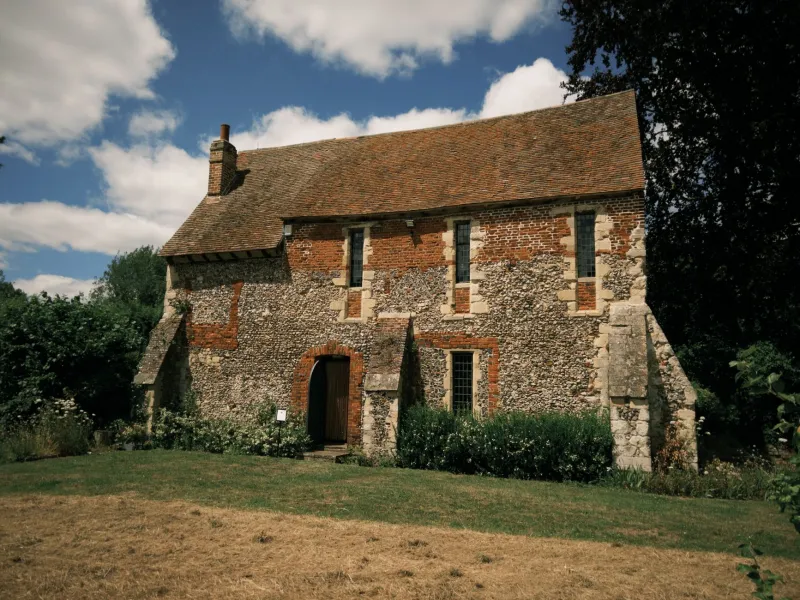
A holy well is rarely impressive at first sight. It may be a low stone arch beside a lane, a shallow basin in a churchyard wall, or a spring that appears only in wet weather. Yet where a well carries the name of St Nicholas, it offers a particularly useful test of how British communities care for small, awkward and easily overlooked heritage. These are not usually sites with visitor centres or timed entry. They are places of seepage, moss, iron railings and local memory, and they ask for a different kind of attention.
Water at the edge of the parish
St Nicholas is a saint of wide associations: sailors and travellers, children and merchants, bridges and safe passage. It is not surprising, therefore, that wells bearing his name are often found where routes meet water: near old harbour approaches, on the edge of market towns, beside lanes that once carried packhorses, or close to churches whose dedications preserve an older pattern of devotion. Some are recorded in medieval charters; others survive only as a name on a tithe map, a field boundary or a modern street sign.
The physical remains vary considerably. A few sites retain a stone wellhouse or a moulded arch. Others are simple culverts, troughs or covered chambers, adapted over centuries for domestic or agricultural use. In some places the dedication has migrated to a nearby bridge, pub or cottage, leaving the water itself unmarked. This dispersal of evidence is part of the conservation challenge. A well can be historically significant without looking it, and a site can be loved locally without being fully understood.
Custom, candlelight and recollection
The patronal feast of St Nicholas on 6 December has long encouraged outdoor observance in winter, and wells have occasionally formed part of that wider pattern. Candlelit visits, short processions, the singing of a carol and the leaving of small tokens have been recorded in various parishes, though practice has always been local rather than uniform. In some places the well is remembered chiefly through children’s visits or a school tradition; elsewhere it survives in the recollection of older residents who fetched water, played beside the spring or were told to treat the site with respect.
Such customs matter to conservation because they keep a site in use without overburdening it. A well that is visited once a year by a small group, cleared of a few leaves and observed carefully through the seasons is often better understood than one that receives a single burst of attention and then none. Oral testimony is especially valuable here. Memories of fencing, drainage, flooding, rebuilding or changes in the surrounding field can explain features that documentary sources leave obscure. Local societies should record these accounts while they can, with permission and proper attribution.
The conservation question
Well conservation is rarely a matter of restoring masonry alone. Water is mobile, and so are the problems around it. Changed drainage, road widening, agricultural run-off, tree roots, vandalism and simple neglect can all affect a site. So can well-meant intervention: aggressive scrubbing of stone, unsympathetic pointing, new concrete surrounds or the removal of vegetation that stabilises a bank. The first principle is therefore restraint. The second is record. The third is consent.
Many wells are on private land, and some lie within churchyards, scheduled monuments or conservation areas. Before any work begins, ownership and designation should be established, and advice sought from the local authority historic environment service, the diocesan advisory committee where relevant, or a county archaeology service. Structural repair should be carried out by practitioners who understand traditional mortars and drainage. Water quality testing is important where public access or interpretation is proposed, but it should not be treated as a substitute for understanding the hydrology of the site.
A caretaker’s checklist
Practical custodianship tends to follow a modest rhythm. An annual visit in winter, when water levels are high, can reveal blockages and erosion that summer hides. A summer visit can assess vegetation and access. Photographs taken from the same position each year create a useful record. Loose stones should be noted rather than moved; fallen leaves can be cleared where this does not disturb wildlife. Fencing, steps and handrails should be inspected for safety, but new fixtures should be kept simple and reversible. Interpretation, if provided, should be brief, accurate and discreet.
It also helps to build a small circle of care: the parish, the landowner, the local history group, the nearest school and perhaps a walking or conservation trust. Each may hold a different part of the story. A joint annual visit, followed by a short written note, is often more valuable than a grand scheme that no one has time to maintain.
Keeping the flame modest
As the 2026 patronal season approaches, many churches will turn again to St Nicholas in music, preaching and community gatherings. The wells associated with him deserve a place in that observance, not as spectacular monuments but as quiet testaments to older habits of attention. A candle beside a spring, a short act of remembrance and a careful note in the parish record may seem slight. In practice, they are the kind of custody that keeps small heritage alive: regular, informed, unassuming and shared.